
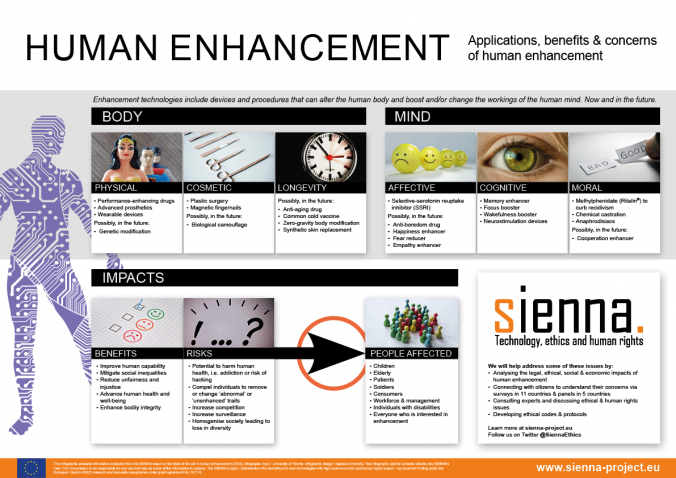
Perhaps you also dream about being more than you are: faster, better, bolder, stronger, smarter, and maybe more attractive? Until recently, technology to improve and enhance our abilities was mostly science fiction, but today we can augment our bodies and minds in a way that challenges our notions of normal and abnormal. Blurring the lines […]
Continue readingPage 17 of 50

Do you use your smartphone to collect and analyse your performance at the gym? This is one example of how new health-related technologies are being integrated into our lives. This development leads to a growing need to collect, use and share health data electronically. Healthcare, medical research, as well as technological and pharmaceutical companies are […]
Continue reading
The rise of antibiotic-resistant bacteria is a global threat to public health. In Europe alone, antibiotic resistance (AR) causes around 33,000 deaths each year and burdens healthcare costs by around € 1.5 billion. What then causes AR? Mainly our misuse and overuse of antibiotics. Therefore, in order to reduce AR, we must reduce the use […]
Continue reading
How can we be sure that a person in front of us is conscious? This might seem like a naïve question, but it actually resulted in one of the trickiest and most intriguing philosophical problems, classically known as “the other minds problem.” Yet this is more than just a philosophical game: reliable detection of conscious […]
Continue reading
Development of new technologies sometimes draws inspiration from nature. How do plants and animals solve the problem? An example is robotics, where one wants to develop better robots based on what neuroscience knows about the brain. How does the brain solve the problem? Neuroscience, in turn, sees new opportunities to test hypotheses about the brain […]
Continue reading
Suppose a philosopher builds a system of ideas based on our mortality. It is the risk of dying, the vulnerability of all things in life, that allows us to find our lives meaningful and our life projects engaging. If we did not believe in the risk of dying and the vulnerability of all things in […]
Continue reading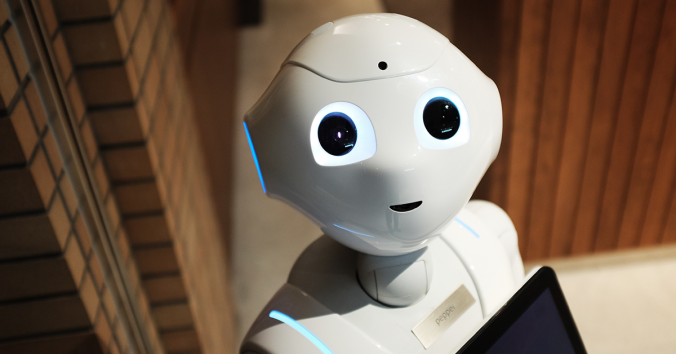
Robots are getting more and more functions in our workplaces. Logistics robots pick up the goods in the warehouse. Military robots disarm the bombs. Caring robots lift patients and surgical robots perform the operations. All this in interaction with human staff, who seem to have got brave new robot colleagues in their workplaces. Given that […]
Continue reading
To understand how our genes affect health and disease, drug reactions, and much more, researchers need to share vast amounts of data from people in different parts of the world. This makes genomic research dependent on public trust and support. Do people in general trust research? Are we willing to donate DNA and health information […]
Continue readingVisionary academic texts are rare – texts that shed light on how research can contribute to the perennial human issues. In an article in the philosophical journal Theoria, however, Kathinka Evers opens up a novel visionary perspective on neuroscience and tragic aspects of the human condition. For millennia, sensitive thinkers have been concerned about human […]
Continue reading
I read a newspaper editorial that criticized ideological elements in school teaching. The author had visited the website of one of the organizations hired by the schools and found clear expressions of a view of society based on ideological dogmas of a certain kind. The criticism may well have been justified. What made me think […]
Continue readingTHE ETHICS BLOG
A research blog from the Centre for Research Ethics & Bioethics (CRB)
We write for researchers, healthcare staff, officials, politicians, patient organisations and anyone interested in ethics.
We comment on the research ethics and bioethics debate and discuss our own research. We address issues from current debates in the research community and in the press.
MEET THE EDITOR

Pär Segerdahl is editor of the Ethics Blog and Associate Professor of Philosophy at the Centre for Research Ethics & Bioethics.