Conference on global aspects of reproductive technology and surrogacy

May 13, 2013

Reproductive technology and surrogacy often is a cross-border practice that raises several ethical issues concerning the rights not only of adult participants but also of the children involved.

Do the children have a right to know about their genetic parents and do they have a right to be recognized by the countries of their contractual parents? What are the rights of surrogate mothers?

These and related questions will be discussed at an upcoming conference,

organized by The Nordic Committee on Bioethics.

Participation is free of charge. Young researchers (mainly PhD students) are invited to submit an abstract no later than May 20.

More information about abstracts, programme and registration can be found on the website of the Nordic Committee on Bioethics.

If you want to participate, register no later than August 15.

Pär Segerdahl

We recommend conferences - the ethics blog


The debate about after-birth abortion continues

May 8, 2013

Last year the Journal of Medical Ethics published an article by two philosophers claiming that the same arguments that support abortion also support abortion of newborns.

The article provoked strong reactions and I too felt I had to comment on the article here on The Ethics Blog.

What’s so provocative? I’m not so sure it is the conclusion that if we allow abortion we also should allow abortion of newborns. The two philosophers actually never concluded with any practical recommendations. They only wanted to theoretically explore the logic in the arguments for abortion.

And maybe this is what’s so provocative, or rather tragi-comical: the spirit in which one approaches questions of life and death as an entrepreneur might use the annual report to consider his reasons for terminating a project that can become a burden for the company.

Recently, the same journal reissued the article; this time with two editorials and a number of comments by ethicists (here).

The reissuing of the article reaffirms the attitude that the burning hot questions of life and death should be discussed as a rational entrepreneur manages his firm.

Should we allow infanticide? We’ll have to postpone decision until we’ve received the annual report from the neuroscientists on neonates’ capacity for thought.

Pär Segerdahl

We follow debates : The Ethics Blog


Revised European data protection will make data about rare diseases even rarer

April 30, 2013

EU is currently discussing changes to the European privacy laws. The intention is to strengthen the protection of privacy and to give people more control over their data.

The problem, which I highlighted on The Ethics Blog, is that the new proposal applies also to research. Presently there is an exception for scientific research about health and disease. The proposed revision of the privacy regulation, however, allows no exceptions.

Every person who has given data to a register must according to the new proposal be asked for consent each time researchers want to study some new disease pattern. Patient data can never be used in research without specific consent, and not even historical registers and data from diseased persons are given exception in the new proposal.

A recent article in Nature Reviews Genetics by Deborah Mascalzoni et al. highlights a patient group that is especially vulnerable to the proposed revision: patients suffering from rare diseases. In Sweden a disease is defined as rare if it affects less than a hundred persons in a million.

Data on rare diseases are, as a matter of course, rare. We therefore know little about these diseases and it is difficult to develop effective medical treatments. To achieve statistically significant analyses, researchers must typically share data over national borders. Every lost piece of data about rare diseases can mean dramatically impaired prospects of new drugs and treatments for these patient groups.

Rare diseases are thus a further strong reason for maintaining the current exception for scientific research in the data protection legislation. Read more on the CRB website.

Pär Segerdahl

Approaching future issues - the Ethics Blog


Unhappy approach behind policy for incidental findings

April 24, 2013

Should individual research participants be informed if biobank researchers incidentally discover increased genetic disease risks through analysis of their samples?

At a seminar, Jennifer Viberg recently discussed a well-known recommendation for when participants should be informed about incidental findings:

During the seminar it became increasingly clear how the authors of the recommendation were proceeding. They started out from how one already handles incidental findings in a more familiar field, namely, imaging studies of the internal organs of the human body. They then generalized that policy to the less familiar case of genomic biobank research.

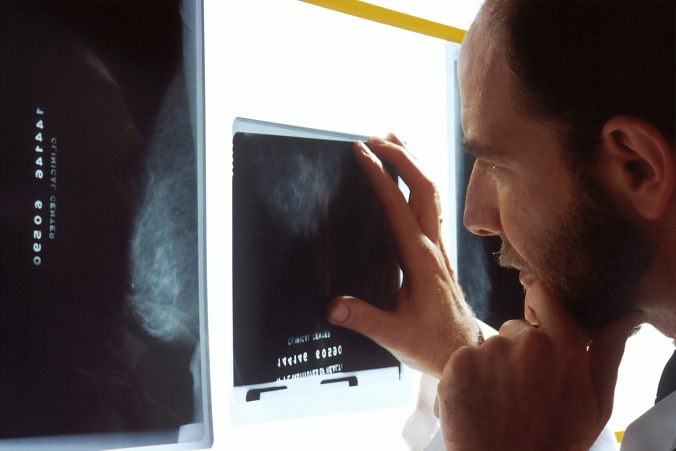
When researchers produce images of the internal organs of the human body they may accidentally discover, for example, tumors in individual research participants. It is obvious that participants should be contacted about such findings so that action can be taken.

The problem when one generalizes from a field with developed policy to a less familiar field, however, is the risk that false analogies govern the generalized policy. By treating imaging studies as paradigm case of individual findings, it might look as if biobank researchers produce images; images of the genome that incidentally reveal individual divergences against which action can be taken – like when a tumor is operated.

The article does not emphasize the fact that incidental findings in biobank research more typically would concern highly complex and difficult to interpret information about increased individual genetic disease risks.

If I have a tumor, it exists within my body and it can be surgically removed. But if I have an increased genetic disease risk, what do I have and in what sense can it be removed? Does “actionability” have the same meaning for diseases and for increased disease risks?

These and related questions about differences are not emphasized in the article. On the contrary, one seems to be in a hurry to generalize a familiar routine to a new field.

Transferring lessons from familiar to less familiar fields seems reasonable. If one neglects the one-way nature of the approach, however, it easily inflicts blindness to essential differences. In her dissertation work, Jennifer Viberg wants to avoid this pitfall.

Pär Segerdahl

We challenge habits of thought : the Ethics Blog


Don’t shoot at the patient (or at the messenger)

April 2, 2013

The newly proposed European Data Protection Directive overprotects research participants and exposes patients to greater risks of contracting illness and dying.

Thus dramatically a recent article in The Lancet Oncology can be summarized, written by Mats G. Hansson at CRB together with Gert Jan van Ommen, Ruth Chadwick and Joakim Dillner.

People who provide data to research registers are not exposed to physical risks, like participants in interventional research. The risks associated with register-based research are informational: unauthorized release of information about participants. One might ask if it even makes sense to say that people “participate in research” when researchers process large data sets.

Patients (and people in general) have significant protection from disease thanks to register-based research. For example, it is estimated that the HPV vaccine will save about 200 women from dying in cervical cancer each year, in Sweden alone. This cancer-preventive treatment became possible because researchers had access to samples dating back to the 1960s providing evidence for a causal connection between a certain virus infection and cervical cancer later in life.

  • Despite this vital value in biobanks and registers,
  • despite the fact that risks are only informational,
  • despite rigorous safety routines to prevent unauthorized spread of information,
  • despite the fact that researchers don’t study individuals but statistical patterns, and
  • despite the question if people really are “participants” in register-based research,

the EU committee proposing the new directive treats the integrity of “research participants” as so pivotal that researchers who process data not only must be subjected to the same ethical review process as for invasive research, but also must obtain informed consent from each and every one who once gave their data to the register, whenever the researchers want to study a new disease pattern.

Data protection efforts easily lose their sense of proportions, it seems, at least concerning register-based research. Not only is one prepared to expose patients to greater physical risks in order to protect research participants from (already rigorously controlled) informational risks.

One also is prepared to disturb data providers who hardly can be described as “participating” in research, by forcing researchers to recontact them about informed consent. Not only on one occasion, but time and again, year after year, each time a new disease pattern is explored in the registers. That’s what I call privacy intrusion!

Pär Segerdahl

We participate in debates - the Ethics Blog


Two PhD positions at the Centre for Research Ethics and Bioethics

March 27, 2013

We are recruiting two new PhD students:

1. PhD position in the field of Research Ethics/Bioethics. This position has two possible research focuses:

2. PhD position in the field of bioethics/philosophy of mind. This position has the following possible research focuses:

  • (a) Conceptual and empirical analyses of the nature and function of consciousness in the light of modern neuroscience and philosophy of mind.
  • (b) How consciousness can be accessed neurotechnologically.
  • (c) Clinical studies of consciousness of patients with disorders of consciousness and ethical analyses of the results.

Read more about the PhD projects and the application in the links above. If you are interested we look forward to receiving your application no later than April 22, 2013.

Pär Segerdahl

We transgress disciplinary borders - the Ethics Blog


Biobank research on the Sámi people should be more transparent

March 20, 2013

Ethnicity is a sensitive issue, so sensitive that one might want to remain silent about it.

Anna Lydia Svalastog at CRB recently published an article about genetic research on the Sámi people in Sweden. She highlights ethical problems associated with the fact that the Sámi focus in these studies is not made transparent.

Svalastog was surprised to discover that 50 years of genetic research on the Sámi people was invisible in the biobank register at the Swedish National Board of Health and Welfare. The reason, she guesses, is that ethnicity is considered unacceptable as a basis for creating registers and biobanks.

Still, some registers and biobanks are in practice Sámi, since data collection was carried out in traditional Sámi areas like Karesuando. When Svalastog studied the way research was carried out she found further tendencies to downplay ethnicity, although it was central in practice.

The Sámi focus of the research was downplayed by a more neutral vocabulary of people living in certain geographic areas. Also the questionnaires downplayed ethnicity. Questions could instead concern livelihood, which, however, can function as an indicator of Sámi ethnicity, since reindeer herding is an exclusively Sámi occupation.

Ethnicity can be reconstructed from the answers, then, but in a manner that risks reinforcing old stereotypes, since many see themselves as Sámi without being reindeer herders.

I don’t think that Svalastog is opposed to biobank research about the Sámi people, but her point is that ethnicity, and the fact that the Sámi is a native people, must be made transparent. Otherwise it becomes difficult to discuss and handle the ethical problems that ethnicity can imply.

The article is published in New Genetics and Society. Svalastog highlights the importance of talking about ethnicity, because it is sensitive.

Pär Segerdahl

Minding our language - the Ethics Blog


Life scientists’ responsibility when their research has dual use

March 13, 2013

Do life scientists have moral responsibility when their research can be used not only to do good (like preventing pandemics) but also to harm others (like developing biological weapons)?

It could be tempting to think that researchers’ only responsibility is the advancement of scientific knowledge. The use and practical application of that knowledge is the responsibility of others.

The September 11 attacks made that idea much less tenable. Since then, the security sector has pushed the scientific community to take more extensive responsibility for research that could be used to develop, for example, biological weapons.

Do scientists have such a responsibility for how others might use their findings? If they do have responsibility, how is it most appropriately approached in practice? These questions are investigated by Frida Kuhlau at CRB in a dissertation that she defends on March 23:

Kuhlau argues that researchers do have a moral responsibility for research with dual use and she tries to specify the content of that responsibility. It includes, for example, always considering possible negative implications of one’s research; reporting activities of concern; being prepared to occasionally delimit the dissemination of results.

How is such responsibility best approached in practice? The traditional way of taking ethical responsibility for research is by imposing ethical regulatory systems (guidelines, codes, ethical review).

Like Linus Johnsson who defended his dissertation last Saturday, Frida Kuhlau doubts such bureaucratic attempts to ethically regulate research. Researchers need to shoulder the responsibility themselves, learning how to deliberate and take action concerning research with dual use.

Shouldering responsibility does not mean, however, doing it alone. Individual researchers normally don’t have all the competencies needed to reasonably assess possible risks of research. The scientific community and the security sector are dependent on each other. What is required to take proper responsibility, Frida Kuhlau suggests, is therefore an ethic of conversation and deliberation.

Taking moral responsibility for research with dual use presupposes ongoing communicational processes. These processes need organizational support, platforms. A novel suggestion in the dissertation is that ethical review boards could function as such platforms.

Rather than only reviewing, as ethical review boards normally do, these boards would support an ethical culture of conversation and deliberation about dual-use research.

For more information about this important dissertation, see News from Uppsala University. If you are in Sweden and want to visit the public examination, it takes place in Auditorium Minus, Museum Gustavianum, Uppsala, Saturday, March 23, 2013, at 09:15.

Pär Segerdahl

We recommend readings - the Ethics Blog


Dissertation on trust in biobank research

March 6, 2013

On Saturday, March 9, Linus Johnsson at CRB defends his dissertation:

The dissertation is based on four studies. The first two scrutinize empirical evidence concerning public trust in biobank research. They indicate that people do trust biobank researchers, at least in Sweden.

Such findings might give rise to complacency. The ethical regulatory system obviously works and promotes trust. Biobankers can relax.

The third study, however, is a conceptual investigation showing such a reaction to be mistaken. Trust creates obligations in the person who is being trusted. If a doctor collects samples from patients and suspects that their trust is mistaken in one way or another, the doctor has an obligation to handle that mistaken trust appropriately. (I’ve written about this study on The Ethics Blog.)

Public trust doesn’t merely indicate trustworthiness. It creates a moral demand. The proper response to public trust in biobank researchers, then, is taking increased moral responsibility.

The fourth study strives in the same direction. It critiques prevalent faith that trustworthiness is best quaranteed by an extensive ethical regulatory system (ethical review, guidelines, etc.). The opposite may very well be the case. Such a system may foster moral complacency and failure among researchers to deal with ethical issues that are not addressed by the system.

If I interpret Linus Johnsson right, the current widespread trust in ethical regulatory systems is mistaken, and his dissertation is an attempt to take responsibility for that mistaken trust by intellectually highlighting and critiquing it.

As this brief summary shows, the dissertation is original and presents some very thought-provoking results, empirically and above all conceptually. For more information about the dissertation, see News from Uppsala University.

If you are in Sweden and want to visit the public examination, it takes place in Auditorium Minus, Museum Gustavianum, Uppsala, Saturday, March 9, 2013, at 09:15.

Pär Segerdahl

We recommend readings - the Ethics Blog


Ethical principles causing moral hallucinations

February 20, 2013

I want to continue the discussion in my previous blog post. It concerned an article raising the question whether researchers in genomics have a duty to actively look for incidental findings.

Joanna Forsberg aptly remarked that the notion of looking for findings that one isn’t looking for is strange. She also pointed out that healthcare doesn’t have a duty to look for incidental findings:

  • “In fact, in the context of healthcare incidental findings are (in general) deliberately avoided, by not doing tests when there is no clinical reason to do them. Is the duty of care more extensive in biobank research?”

This pertinent remark ought to worry ethicists. How can the ethical debate have reached a point where it is asked if researchers have duties to provide more healthcare than healthcare itself?

I couldn’t free myself from this problem that Joanna’s remark revealed.

I now believe it has do with the professionalization of ethics. It has become the ethicists’ professional duty to apply ethical principles to medical research. This works tolerably as long as it is possible to identify the traits that make the principles applicable. The application of the principle of beneficence, for example, presupposes that one can identify beneficial traits.

The reason why incidental findings in biobank research are debated so hotly, it seems to me, is precisely the difficulty of identifying traits in this complex terrain to which relevant ethical principles are applicable. Ethicists try hard to find aspects of genetic risk information and participation in biobank research that would make it possible to apply the principles of

  • respect for persons
  • beneficence
  • non-maleficence
  • reciprocity

so that the ethicists can fulfill their professional duty to guide biobankers by proposing an ethical policy for incidental findings.

The risk, however, when ethical principles are applied in desperation precisely because their application is unclear is that the principles begin to steer the description of reality… and to such an extent that they make us hallucinate moral duties.

I think that Joanna’s remark should act as a reminder of that risk.

Pär Segerdahl

We challenge habits of thought : the Ethics Blog


Follow

Get every new post delivered to your Inbox.

Join 42 other followers

%d bloggers like this: