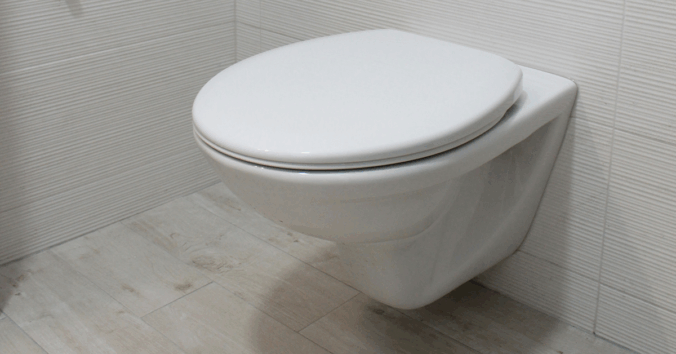
There is something misleading about the image of knowledge gaps. We imagine the gaps as voids that could easily be filled with knowledge. The challenge is often, on the contrary, to deal with the stubborn beliefs and attitudes that the knowledge gaps are already filled with. If our knowledge gaps were as empty as those of the philosopher Socrates – who never thought that he knew what he did not know – then our knowledge gaps would not be such a challenge.
When I read my colleagues’ studies on risk communication, I am forced to admit that my own knowledge gaps are not empty but overflowing with old beliefs and attitudes. I thought I knew that the risk of breast cancer is not significantly affected by lifestyle factors. Therefore, I thought I knew that women cannot reduce their risk by, for example, exercising more or drinking less alcohol. Now I am beginning to understand that I probably do not know what I thought I knew. But because my knowledge gaps are already filled with these old beliefs – I have no idea how they got there! – knowledge has a hard time getting in. Can it really be true that lifestyle changes can reduce the risk, I ask myself, even though I do not really know a thing about the matter and therefore should not ask myself.
To design effective health information that can help people reduce their own risk of disease, we do not just need to identify knowledge gaps. We also need to identify the content that already fills the gaps and where they get this content from. Interview studies are a source of valuable knowledge here. A study in BMC Public Health, with Åsa Grauman as one of the authors, explores the content of the knowledge gaps about breast cancer. The researchers interviewed 16 Swedish women aged 24–68 about their perceptions of breast cancer, attitudes towards preventive measures, and need for risk information.
Of course, many of the women were well-informed and kept up to date with new research, for example through newsletters from a national cancer society. However, the interviewees’ perceptions of breast cancer were shaped not least by personal stories about acquaintances who had developed the disease, gripping stories in women’s magazines, and televised fundraising events. Campaigns had informed the women that early detection is important, but not that lifestyle factors affect the risk of breast cancer. Their image was that breast cancer is an unpredictable disease that can possibly be influenced by early detection but not significantly by changing lifestyle habits. Specific habits were not linked to breast cancer, and good habits were considered to help against disease in general. Changing certain habits to reduce one’s risk of breast cancer could only be considered if the lifestyle change had a clearly demonstrated effect on the risk of breast cancer.
The women’s assessments of their own risk of breast cancer could be both emotional and logical. A woman who had a relative who died of breast cancer in her 30s felt that her own risk decreased the longer she lived after that age. Even though she did not intellectually believe that the risk decreased with age, she experienced it that way.
Information about lifestyle factors can create new stereotypes and attitudes, women said in the interviews. If alcohol consumption is emphasized as a risk factor, this can blame patients and create beliefs that the patient’s cancer was caused by alcohol consumption. So even when knowledge gaps are filled with accurate information about lifestyle factors, it is important not to overemphasize personal responsibility. Informing about modifiable risk factors without at the same time informing about non-modifiable factors can create new knowledge gaps where breast cancer is perceived as a disease linked to certain lifestyles, it was pointed out in the interviews.
How can knowledge gaps be filled with information that actually helps women reduce their risk of breast cancer? The interviewees emphasized that it is not enough to simply be told that exercise is good and that drinking alcohol is bad. In order to change their habits, the interviewees required detailed scientific evidence. Why does a certain habit increase the risk of breast cancer? What happens in the body and exactly how much does changing the risk factor reduce the risk?
I have only reproduced a small selection of the results from the study here. If you want to know more, you can find the article here: Women’s perceptions of breast cancer risk and prevention: insights into knowledge gaps and lifestyle attitudes.
Finally, if I may return to my personal confession above, I understand that the interviewees required detailed evidence about modifiable risk factors in order to consider changing their habits. Human knowledge gaps are usually filled, only a Socrates keeps them empty. Therefore, we cannot expect new health information to be accepted without resistance – as when an airstream fills a void. The information must communicate sensitively with the beliefs that already fill the knowledge gaps. That is why interview studies are so important.
Written by…
Pär Segerdahl, Associate Professor at the Centre for Research Ethics & Bioethics and editor of the Ethics Blog.
Jonsson, H., Hedström, M. & Grauman, Å. Women’s perceptions of breast cancer risk and prevention: insights into knowledge gaps and lifestyle attitudes. BMC Public Health 26, 1238 (2026). https://doi.org/10.1186/s12889-026-27291-7
We care about communication