

Healthcare is fraught with ethical challenges. Every day, nurses, physicians, and other professions encounter situations where different values and norms come into conflict. This may involve patients who resist essential care interventions, difficult prioritizations when resources are limited, or ethical challenges related to participation, autonomy, integrity, and dignity. Navigating these situations requires not only nursing and medical competence but also ethical competence.
At the same time, modern healthcare places increasing demands on healthcare professionals to conduct ethical analyses, make well-founded decisions in complex situations, and cultivate their professional judgment. Various forms of clinical ethics support aim to help professionals identify and handle ethical challenges, as well as reflect on the appropriate course of action in specific situations. Ethics rounds, where healthcare professionals can reflect together on ethical challenges in patient situations, is one such example. When various professions participate in these rounds, they contribute diverse perspectives on the situation, the ethical challenge, and the relationships with the patient and their next-of-kin. Common goals of ethics rounds are to create a basis for difficult decisions, strengthen ethical competence, and promote an ethical climate within the organization. Despite this, access to such clinical ethics support varies across Sweden’s healthcare regions, often leaving healthcare professionals to handle ethical challenges without formal support.
To meet these requirements, education must provide students with both theoretical knowledge and practical tools for ethics reflection and analysis. Against this backdrop, the Medical Ethics Delegation of the Swedish Society of Medicine and the Ethics Council of the Swedish Society of Nursing have formulated recommended interprofessional learning objectives for education in care ethics. These objectives emphasize, among other things, the ability to conduct ethical analysis based on the values and interests at stake, to weigh various courses of action against one another, and to participate in interprofessional ethics reflections using established models.
Research is essential for offering evidence-based education in care ethics and for developing effective forms of clinical ethics support. Studies on how various types of ethics support and ethics education function are crucial for the advancement of both academic training and clinical practice. In Sweden, there are currently specialized units for medical ethics at Karolinska Institutet, Linköping University, Lund University, and Uppsala University. These environments combine expertise in ethics and medicine, playing a significant role in research and education within the field. Professors of medical ethics – all of whom are men – are responsible for ethics teaching in programmes in medicine.
In contrast, the nursing profession – the largest occupational group within the healthcare sector – is notably underrepresented at these units. Ethics teaching in nursing programs has frequently been delivered either by nurses who are highly committed but lack formal theoretical and scientific expertise in ethics, or by philosophers and theologians with limited experience of the practical and organizational realities of healthcare. To ensure that education and research reflect the ethical challenges inherent in healthcare, there is a need for stronger academic development of care ethics as a discipline – one that integrates expertise in both ethics and care.
Sweden has three emeriti professors in care ethics: Gunilla Silfverberg and Göran Lantz, both formerly affiliated with Ersta Sköndal Bräcke University College (now Marie Cederschiöld University College), and my predecessor, Anna T. Höglund. Regrettably, there are currently no professorships in care ethics at the universities that educate nurses. This limits the potential to generate new knowledge regarding ethics of care and to build sustainable, long-term research and educational environments. Furthermore, care ethics has come to be treated as a subfield of caring science or nursing, rather than as an independent academic discipline. This risks constraining the development of research and education within the field.
The Centre for Research Ethics & Bioethics (CRB) at Uppsala University is the largest unit in Sweden dedicated to medical ethics (healthcare ethics). It is also unique in that the nursing program is housed within the same department (the Department of Public Health and Caring Sciences). On November 1, I was promoted to Professor of Caring Science, with a focus on Care Ethics at CRB. This means that CRB now has a professor focused on care ethics, even though care ethics itself is not recognised as an independent academic discipline. Nevertheless, the professorship contributes a nursing and care perspective to the centre’s work in healthcare ethics and strengthens its capacity to develop research, education, and ethics support that are grounded in the ethical challenges of clinical care.
If healthcare is to meet the ethical challenges of the future, care ethics must be given a stronger position in both clinical practice and academia. Care ethics and clinical ethics support are not optional additions to good care; they are essential prerequisites for it. Therefore, care ethics needs to be strengthened through education, research, and accessible ethics support for healthcare professionals.
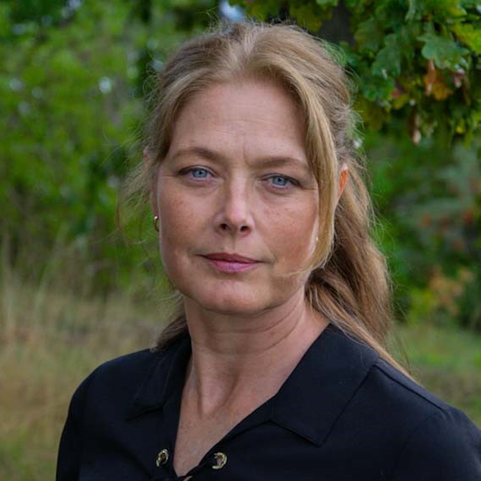
Written by…
Pernilla Pergert, professor of caring science with a focus on care ethics at the Centre for Research Ethics & Bioethics (CRB).
