
A research blog from the Centre for Resarch Ethics & Bioethics (CRB)

Month: June 2026

Artificial consciousness – a look behind the hopeful facade

During the 20th century, it was often considered scientifically suspect to talk about consciousness or to use psychological concepts that were not defined in terms of observable behavior. For even longer periods, consciousness, or the soul, was attributed only to some humans who in turn guarded the concept very carefully so that it did not risk being transferred to “others” (at least not fully). Against this background, it is surprising to note how the possibility of conscious machines has suddenly begun to be considered an important scientific question. In some cases, artificial consciousness is even treated as a strategic goal to be realized through new research efforts. Where does this sudden hopefulness about conscious AI come from, when consciousness was previously surrounded by strict skepticism and border control?

In an article, Kathinka Evers takes us behind the hopeful facade. Where does this unexpected optimism come from? Have we become more open-minded lately? Perhaps partly, answers Kathinka Evers, but the optimism about machine consciousness may also be a new form of human self-aggrandizement. How so? If we humans (or some human group) could produce artificial consciousness, we (or that group) would resemble the creator god that humans have long believed made them in his image. We (or that group) would take over the top position that humans have submitted to for millennia.

The hopefulness probably also reflects notions that machine consciousness could give artificial systems even more powerful capabilities that humanity could benefit from, writes Kathinka Evers. Conscious AI could make complex decisions that consciously consider human values ​​and moral norms. It could protect us better than we can protect ourselves. That certainly sounds hopeful. But given that we are already programming drones and missiles to harm and kill people – in accordance with human values ​​and norms – we should probably examine ourselves more carefully before we place too much faith in our machine images. Could they possibly create even greater threats rather than protect us from them?

Humans are contradictory. We are as compassionate as we are insensitive. Our sympathies for each other are selective and have made human groups in most cultures and historical periods violent and destructive towards other ethnic groups, towards women, towards the poor, towards other species, writes Kathinka Evers. The border surveillance of the concept of consciousness (or the soul) to ensure exclusivity is just one of many examples of this tendency to unite by distinguishing. Human values ​​and norms separate us from each other as much as they connect us. Wouldn’t artificial consciousness, created in our image, also multiply our human conflicts? Should we rather hope that conscious AI – if it were possible – is not aligned with human values and moral norms?

If you want to travel further behind the hopeful facade, read the article here: Artificial Consciousness: Science Fiction, Utopia, or Pandora’s Box? Kathinka Evers also discusses whether artificial consciousness can be considered a possibility, how such consciousness could be detected, and what research into artificial consciousness can actually teach us. Perhaps it is rather that through such research we would learn more about ourselves and return from the detour much wiser?
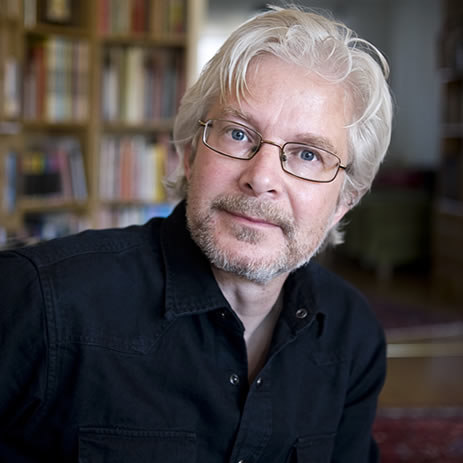
Pär Segerdahl

Written by…

Pär Segerdahl, Associate Professor at the Centre for Research Ethics & Bioethics and editor of the Ethics Blog.

Evers, K. (2026). Artificial Consciousness: Science Fiction, Utopia, or Pandora’s Box? In Proceedings of the Paris Institute for Advanced Study (Vol. 27). https://doi.org/10.5281/zenodo.20267984

This post in Swedish

We like challenging questions

The importance of children’s assent to research

In the field of childhood cancer, care and research are closely linked. Children treated for cancer are often involved as participants in studies that can contribute to better future cancer care. It is the parents who are asked to give their consent to the child’s participation in research, but the child’s assent is also a requirement. Despite this, children are not always involved in decisions regarding their research participation, often out of concern for the children.

An article in Nursing Ethics with Kajsa Norberg Wieslander as lead author argues insightfully for the importance of genuinely asking for children’s assent to research, and for the importance of continuously involving children in decisions regarding their research participation. The starting point is a multidimensional concept of autonomy as not only a right to be respected. Especially when it comes to school-age children (7–14 years), autonomy should also be understood as a value to be supported and developed. This further means that children’s assent and decision-making is understood as a relational activity. Through dialogue, through explanations at the child’s level, and through sensitivity to the child’s emotional needs, the child is supported to make their own decisions that might not otherwise have been possible.

Kajsa Norberg Wieslander further emphasizes trust as a prerequisite for relational autonomy. Trust is at the same time a result of the child being allowed to participate in decisions about their own participation in research. Trust is also described in the article as an ethical challenge. If parents trust that the care team will always act in the child’s best interests and therefore hand over decisions about the child’s research participation to the healthcare professionals/researchers, this can lead to the child feeling overrun and unable to influence their situation, which damages the child’s trust.

The article emphasizes that children’s assent is important to avoid children being treated as means and not as ends in themselves, as persons. Children’s assent to research counteracts their being instrumentalized. Children’s assent must therefore not be treated as a mere formality. Such an attitude towards their assent could recreate the risk of them being treated as means and not as persons with their own abilities, perspectives and ambitions.

The article concludes with a discussion of paternalism – such as excluding children from decision-making in the child’s best interest or making decisions that go against what the child has said they prefer. Paternalism towards children may be justified in some situations, but if autonomy is understood as a value and as a relational activity, then there are strong ethical reasons to support children’s autonomy in this multidimensional sense by including them in decision-making and respecting what they say. Especially when it comes to research participation. Since the benefits to the child of participating in research are uncertain, paternalism is particularly questionable here and if the child objects to participation in research, this must be respected, emphasizes Kajsa Norberg Wieslander.

You can find the clear and concise article here: Why children’s research assent matters: Exploring three dimensions of autonomy.

If you want to read the entire dissertation in which the article is included, you can find it here: Toward best ethical practices for including children in childhood cancer research.

Pär Segerdahl

Written by…

Pär Segerdahl, Associate Professor at the Centre for Research Ethics & Bioethics and editor of the Ethics Blog.

Norberg Wieslander K, Godskesen T, Höglund AT, Frygner-Holm S, Juth N. Why children’s research assent matters: Exploring three dimensions of autonomy. Nursing Ethics. 2026;0(0). doi:10.1177/09697330261424347

Norberg Wieslander, K. 2026. Toward best ethical practices for including children in childhood cancer research. Digital Comprehensive Summaries of Uppsala Dissertations from the Faculty of Medicine 2222. 79 pp. Uppsala: Acta Universitatis Upsaliensis. ISBN 978-91-513-2701-3

This post in Swedish

We recommend readings