

When we talk about norms, we often overlook a higher norm in human interaction. I am thinking of the norm of having knowledge, the demand to know. Why do I say that knowledge is a higher norm? Because norms presuppose our knowledge of them. If we did not know which norms apply, they would lie by the wayside. They would lie in the ditch, and the wrong norms would guide us along the way. Being a good parent, for example, presupposes that we are acquainted with the norms of good parenting and understand what they require of us. We seem to live under this higher demand for knowledge of applicable norms. How ashamed we feel when we are ignorant of what applies and everyone else seems to know.
If the norm of knowledge permeates human interaction, it can also characterize our unconscious role play in the various situations of life. We do not notice how our gestures, tone of voice and behavior are often involuntarily governed by the superior demand to know what applies. The higher demand for knowledge, which should keep us on the right track, can paradoxically lead us into the labyrinths of lies. The fear and shame of not knowing is so intolerable that we instinctively flee from our ignorance by presenting a confident façade. Not least before ourselves. We imagine that we know what we do not know, and mere assumptions become firm convictions. The demand for knowledge thus gives rise to its opposite, it creates shadow worlds that we take for reality.
Philosophy is usually explained as the love of wisdom. Perhaps one could say that this love, ever since the days of Plato, has expressed itself in the fact that philosophers have always taken the norm of knowledge particularly seriously. In this post, I want to point out how this seriousness invites two possible philosophical tasks, which complement each other. An obvious task, which directly corresponds to the norm, is of course to critically examine how we live up to the norm of knowledge. False and unfounded claims to knowledge are identified and replaced by more well-considered ones. This philosophical task also includes developing a systematic knowledge-seeking approach that more rigorously takes us closer to the norm.
This philosophical task is not simple, however, because it is unclear how the norm of knowledge should be interpreted. What is knowledge? What does it mean to have knowledge about plant and animal life or about statesmanship and society? What does it mean to have knowledge about right and wrong or about beauty and ugliness? Ever since the days of Plato, philosophers have disagreed about what it means to live up to the norm of knowledge, and they have discussed which knowledge-seeking approach best ensures that we approach the norm rather than move away from it. Philosophical schools have criticized each other as ignorant of what knowledge is, and thus ignorant of how best to seek knowledge. So, while philosophers do indeed often identify false claims and provide good reasons for more well-considered positions, philosophy hardly functions as a higher court that authoritatively sorts out human disagreements about true and false, right and wrong. It often exhibits the same kind of human disagreements that it feels a responsibility to sort out in a systematic way. Philosophers have sometimes experienced their recurring disagreements as something of a scandal in philosophy and as a crisis for all of humanity. How is knowledge possible if even philosophy fails to live up to the superior norm that it takes so seriously?
But as I said, the norm of knowledge also invites another possible philosophical task, which complements the former. The second task is to confront the dark side of the norm of knowledge by examining how the demand for knowledge also generates shadow worlds. For like all norms, the higher norm of knowledge tends to generate its opposite. The expectation placed on us to know what applies triggers an increasingly rapid reflex to hide our uncertainty behind a confident façade. This unnoticed reflex becomes an unconscious habit. It feels so uncomfortable to stand there with empty knowledge gaps, that we routinely fill the gaps with perceptions about all sorts of things that we do not really know much about. The theme has been touched on in a previous post: Health information when knowledge gaps are already filled. The post was about the difficulty of reaching out with new health information when our knowledge gaps are paradoxically not empty but filled with perceptions that oppose the information.
The second task of philosophy – to draw attention to the dark side of the norm of knowledge – means that we open ourselves to our own uncertainty. We do not give in to the flight response that the knowledge norm activates when we feel the discomfort of uncertainty. We do not hide behind a façade but admit honestly and humbly: I don’t know. Instead of giving the appearance that we live up to the norm, we find ourselves at the absolute zero point of knowledge claims. Only from this lowest point can we freely examine how the higher norm generates shadow worlds in our ways of thinking, speaking, and living. This task is not easy either. Anyone who lives in a shadow world is unaware of the fact that it is only a shadow world, since the shadows have become the archetype of reality. The philosophical task of elucidating how these shadows arise and are assigned the lead role as the archetype of reality thus requires a certain freedom from the norm of knowledge. Merely tightening the requirements of the norm provides dubious protection against our resistance to facts, since the norm itself tends to generate the shadow pictures that it was intended to exclude. Therefore, the humbler task of philosophy is to illuminate how the knowledge norm generates shadow worlds within us.
In conclusion, I would like to say that philosophy – the love of wisdom – has two complementary tasks. If we do not pay attention to the dark side of the norm of knowledge, there is a risk that the emphasis on the bright side will lure us back into the shadows. The love of wisdom is greater than the demand for knowledge. Without condemning or shaming, the love of wisdom illuminates the dark side of the norm of knowledge – so that we can finally say, with Socrates: “when I don’t know things, I don’t think that I do either.”
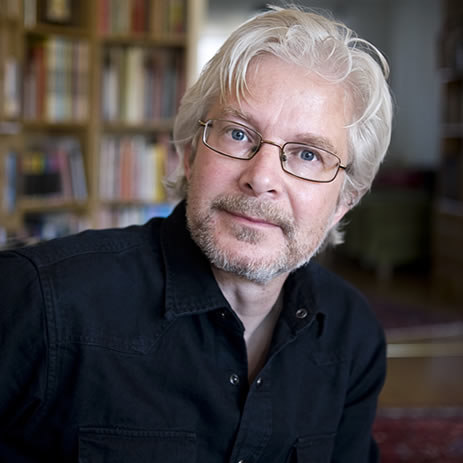
Written by…
Pär Segerdahl, Associate Professor at the Centre for Research Ethics & Bioethics and editor of the Ethics Blog.
Thinking about thinking
