
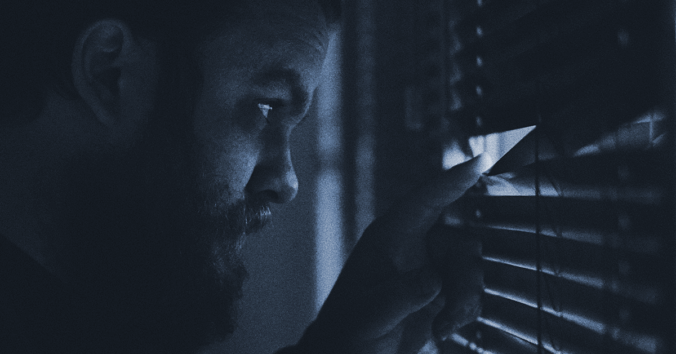
Fear can easily play tricks on us thinking beings. When we are afraid of something, we often think that we should worry about it – so as not to lose control of it. So, to be on the safe side, we lie awake half the night thinking. We dare not let go of our thoughts, because they seem to watch over us as our personal guardian angels: as our private security service.
Another trick that fearful thoughts play on us is that they identify the cause of the fear with external factors that seem to make it reasonable to be afraid. It is difficult to be afraid of a simple stove if you do not constantly think about all the burns you would get if you put your hand on a red-hot stove. Through thoughts, fear creates its own claims to knowledge and its own worldview. Thoughts make fear appear realistic. People who do not share our fear are perceived as deceived and must be considered dangerous, because they risk leaving stoves on. Thus, fearful thoughts also motivate realistic safety measures: we do not visit strange kitchens without asbestos gloves. How fortunate that fear watches over us.
Another trick that fearful thoughts play on us is that they make us believe that we are safer if as many people as possible share our fear. Therefore, we try in every conceivable way to influence each other through the channels available to us. If necessary, we organize our own news channels, perhaps even our own security services, to protect us from all the evils that our trusted channels warn us about.
Daily contact with fearful thoughts makes it easy to identify with dramatic tales of a great struggle between guardian angels and dangers: between the forces of light and darkness. In the world of fairy tales, we identify with the guardian angels, or with the defenseless good people who must be defended by strong guardian angels. Since fear creates its own claims to knowledge and its own worldview, identification with the world of fairy tales can also encourage very dramatic safety measures against what we perceive as real threats. How wonderful to be able to stage the fight we read about in the fairy tales, where good-hearted fear triumphs over all the evils it is frightened by!
But does fear really know what we should be afraid of? Do we live in the frightening world that our guardian angels inform us about? Do we become safer by sharing our fear with as many people as possible? Or would the world be safer if we did not expose it to the tricks of our fear?
Here we can get a little worried, because surely, we should be afraid of something? Surely it must be reasonable to be afraid of what is truly dangerous? How can we realistically make the world safer if we do not get more people to share our well-founded fear? Is it not naive to believe that the deceived will voluntarily give up their distorted worldview? Therefore, well-founded information must be spread through trusted channels so that more people get involved in the fight against what is truly dangerous!
How can justified fear sound so similar to unjustified fear? Perhaps because in both cases the fear is framed by thoughts that tell us how justified it is. Feeling fear is natural and correcting false claims is important, but the tricks that fear plays on us thinking beings are artful and difficult to see through. For how can we examine our own security apparatus without engaging it again and letting it inform us about whether it constitutes a serious threat to our security?
Incidentally, there are other ways to read fairy tales, quieter reading experiences that make us familiar with how fear takes shape within ourselves.
Written by…
Pär Segerdahl, Associate Professor at the Centre for Research Ethics & Bioethics and editor of the Ethics Blog.
Thinking about thinking

Well …, yes and no! To give an example: a woman whom I knew well was very afraid of railway tracks, and she managed to also give this fear to her small son (who never had experienced anything dangerous in connection to railway tracks). My own guess about this whole problem is (on the basis of MANY observations) that such phobias are transferred to small children by the ways how adults are spontaneously reacting to some topics in the presence of the children (being myself a biologist, I call this mechanism of transfer “imprinting”). And for our furry ancestors it was very good for survival – instead of collecting own experiences about big predators and/or poisonous snakes it is more healthy to avoid circumstances under which there would be an enhanced probability to get involved with them. – So far the past, and the mechanism of imprinting is certainly still with us. – On the other hand we have also in the present problems which we would have VERY good reasons to try and avoid them before/instead of having to tackle them in reality because they have become acute (examples would be war or also climate change). Larger numbers of people have woken up to these dangers
and are trying to do something in order to prevent them, which well-established groups in especially the USA take as a reason to scorn them (or even forbid them by law) as “woke”. And in the present fight between problem awareness and problem denial I think it would be a SERIOUS mistake just to concentrate on trying to talk/educate/cure people out of their “woke” fears while the propaganda of those who are profiting from the present situation is just left to drone on. One can (and should) try to give those “woke alarmists” more detailed and realistic ideas about the dangers they see and are afraid of, but about the realistic dangers there are (and are confirmed not only by science but also by e.g. insurance companies) one should CERTAINLY encourage, help and take ACTION.
Thank you for commenting and providing examples.