
A research blog from the Centre for Resarch Ethics & Bioethics (CRB)

Month: January 2026

Do physicians have sufficient knowledge about genomic medicine?

As patients, we are used to providing samples so that the physician can make a diagnosis and prognosis and choose treatment. But it is becoming more common for physicians to also order genomic tests in order to make the diagnosis, prognosis and treatment even more individualized. Even common diseases such as cardiovascular disease, diabetes and depression can become subject to this approach, where information about the patient’s DNA is obtained together with other samples.

As genomic medicine becomes more common, physicians in a variety of specialties need to know more about genetics and genomics. Do physicians who are not specialists in clinical genetics have sufficient knowledge to be able to order relevant tests, interpret test results and talk to patients? How do they prefer to work with genomic medicine? What support do they need and how do they want to learn more? These and other questions were investigated in a survey study aimed at Swedish specialist physicians in, among others, oncology, gynaecology and obstetrics, and general paediatrics; clinical geneticists were excluded.

The study suggests that Swedish physicians want to learn more about genomic medicine, that they are currently learning more, but that the level of knowledge may be low. The physicians in the study expressed a great need for support in matters related to genomic medicine. Although some physicians preferred to refer patients who could be considered for genomic medicine to regional genetics services, a majority preferred to manage the patients themselves, provided that they received good support. What they mainly wanted help with was choosing suitable tests and interpreting test results. The majority of the physicians reported that better knowledge of genomic medicine would change the way they work as physicians. They seemed to prefer to learn more about genomic medicine not through university courses, but through continuous education of various kinds.

In their discussion, the authors (including Joar Björk and Charlotta Ingvoldstad Malmgren) emphasize that physicians’ uncertainty about choosing suitable tests and interpreting test results is probably hampering the mainstreaming of genomic medicine today. Support and training should therefore focus particularly on these tasks. They also note that the physicians mainly requested support of a more technical nature and were less interested in learning more about ethics and communication with patients and families. They may believe that they can rely on their general competence as physicians in these areas, but genomic medicine presents physicians with particularly difficult ethical and communicative challenges, the authors point out. Genetic counselors may therefore have important functions in genomic medicine.

More specific results and the authors’ discussion can be found here: Self-assessed knowledge of genomic medicine among non-genetics physicians – results from a nationwide Swedish survey.

The authors conclude that Swedish physicians have already taken important steps towards making genomic medicine common, but that mainstreaming requires continuous educational efforts, support from regional genetics services and improved guidelines for how to collaborate.
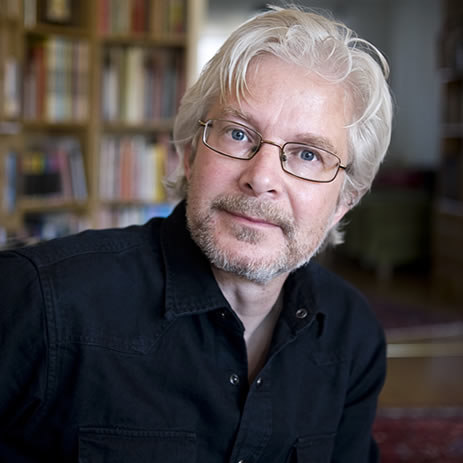
Pär Segerdahl

Written by…

Pär Segerdahl, Associate Professor at the Centre for Research Ethics & Bioethics and editor of the Ethics Blog.

Björk, J., Friedman, M., Nisselle, A. et al. Self-assessed knowledge of genomic medicine among non-genetics physicians – results from a nationwide Swedish survey. Journal of Community Genetics 16, 669–677 (2025). https://doi.org/10.1007/s12687-025-00818-y

This post in Swedish

We have a clinical perspective

Need for evidence on nursing in childhood cancer care?

Caring for children with cancer involves more than just medical cancer treatment. Nurses are responsible for a wide range of nursing tasks. They discuss the disease and treatment with children and parents, monitor children’s nutritional needs, give pain treatment, insert catheters, care for wounds and much more.

These nursing tasks are associated with varying degrees of uncertainty about how they are best performed and there may therefore be a need for more evidence. In a recent study, health care professionals at six childhood cancer centers in Sweden were asked about knowledge gaps that they perceived created uncertainty in their work. What questions does future nursing research need to investigate more closely?

The study identified approximately fifteen aspects of nursing that the staff considered required research efforts. They expressed uncertainty about aspects such as how best to talk to adolescents about fertility and sexuality, the benefits and disadvantages of tube feeding, how best to support children’s and families’ participation in care, or how pain assessment methods can be integrated more efficiently to ensure good pain relief. They also expressed uncertainty about children’s and adolescents’ body image and how it is affected by treatment effects on appearance, and uncertainty about the best diet in connection with cancer treatment.

Identifying areas where more research is needed is important. However, in the discussion of the results, the authors emphasize that evidence for many of the areas identified already exists. Of course, even more evidence may be needed. But it may also be that the research has not been effectively disseminated to nursing practice. The authors therefore emphasize the need to actually implement evidence in the form of guidelines and treatment protocols. They also emphasize that one way to increase awareness of existing evidence is to increase nurses’ involvement in research.

Read the article here: Research gaps in nursing status and interventions – A deductive qualitative analysis of healthcare professionals’ perspectives from Swedish childhood cancer care.

Pär Segerdahl

Written by…

Pär Segerdahl, Associate Professor at the Centre for Research Ethics & Bioethics and editor of the Ethics Blog.

Cecilia Bartholdson, Anna Pilström, Pernilla Pergert, Johanna Granhagen Jungner, Maria Olsson, “Research gaps in nursing status and interventions – A deductive qualitative analysis of healthcare professionals’ perspectives from Swedish childhood cancer care,” European Journal of Oncology Nursing, Volume 78, 2025, https://doi.org/10.1016/j.ejon.2025.102972

This post in Swedish

We recommend readings

When we ourselves contribute to the problem: a retrospective view of resignation syndrome

Humans are good at solving problems. But solutions also cause unforeseen problems. The latter problems can be more difficult to understand because they are so close to us: we do not see how we ourselves create them through our solutions. A person who feels that no one smiles at her may be unaware of how she herself never smiles but observes her surroundings with a demonstratively stern look, as if that could help: “Why should I smile when my so-called fellow human beings never do? They are the problem, not me!” In retrospect, we can more easily see and admit how we ourselves contributed to the problem by our way of solving it. But try to overview similar patterns while being part of them and actively considering everything from your perspective!

So-called resignation syndrome in refugee children, which affected more than 1,000 children during more than two decades, is now history. In a new article, Karl Sallin looks back at the rise and fall of the illness, which manifested itself as loss of physical and mental functions. The children who were affected could neither move nor communicate, but were bedridden and needed tube feeding. The prevailing problem analysis was that the condition was caused by trauma and stress, not least the stress of living under the threat of not getting a residency permit, and that the children’s defeatism took on these physical and mental expressions. In the search for an effective treatment, it was therefore assumed that the children needed security in order to recover: security in the form of closeness to the family and a residence permit. Therefore, the care of the children was handed over to the parents and residence permits began to be used as part of the treatment. The syndrome, which showed no signs of subsiding but, on the contrary, continued to engage and be discussed in the media, however, exhibited a strange pattern. The illness only affected refugee children in Sweden, and moreover children mainly from states in the former Yugoslavia and states in the former Soviet Union. If the problem analysis was correct, then refugee children in countries other than Sweden should also exhibit the symptoms, since they have experienced similar forms of trauma and stress. Nor should refugee children from states in the former Yugoslavia and Soviet Union be overrepresented.

Karl Sallin describes how the treatment of resignation syndrome changed over time. The change was partly related to the syndrome’s nation-bound pattern, partly to the discovery of some cases of child abuse and simulation. Although trauma and stress contributed to the symptoms, it became clearer over time that the syndrome was probably also related to other and more decisive factors. The asylum process was separated from treatment and a child protection focus meant that the child was often separated from the family. This proved effective, and what Karl Sallin calls a culture-bound endemic soon ebbed away.

In retrospect, the pattern of the syndrome can be more easily seen. It becomes clearer how a link between symptoms and residence permit, as well as colorful media stories about the disease, could not only encourage simulation, but also create strong disease expectations in refugee children and their families that actually caused life-threatening conditions. Think of the placebo and nocebo effects, where deep expectations cause recovery or disease. Karl Sallin therefore argues that even if cases of simulation were discovered, refugee children really became life-threateningly ill because of the way resignation syndrome was diagnosed, debated and treated in Sweden. Human expectations are not to be trifled with, but both the treatment of the syndrome and the media stories about it seem to have done so. Is the general pattern familiar?

Karl Sallin suggests that resignation syndrome requires a constructivist perspective on illness in order to be understandable, and that the label, diagnosis and treatment probably caused harm. To avoid similar events in the future, greater awareness is needed of how our ways of labeling, diagnosing, treating and narrating illness can also contribute to illness, he writes. Given medicine’s duty not to harm, such awareness is essential.

The article concludes with the suggestion that it would be reasonable to withdraw the resignation syndrome diagnosis now that it is no longer serves its purposes. Read the article here: Looking back at resignation syndrome: the rise and fall of a culture-bound endemic.

Pär Segerdahl

Written by…

Pär Segerdahl, Associate Professor at the Centre for Research Ethics & Bioethics and editor of the Ethics Blog.

Sallin, K. Looking back at resignation syndrome: the rise and fall of a culture-bound endemic. Philosophy Ethics and Humanities in Medicine 20, 41 (2025). https://doi.org/10.1186/s13010-025-00209-8

This post in Swedish

We challenge habits of thought