

Perhaps I should start by mentioning that I am not an expert on Confucius but find him inspiring. This post just expresses that inspiration, nothing else.
Given how conflicts are constantly recreated, everywhere and in all areas, one might wonder if we can ever change by seeing our mistakes. We have mastered so much through new knowledge in various fields. Yet we are constantly drawn into new conflicts, despite our knowledge of the pattern. Historians have always followed intrigues, wars and conflicts particularly closely. We know everything we need to know.
Perhaps we can still sense how conflicts re-emerge despite knowledge of the pattern. For is not knowledge part of the pattern? Consider how we are engaged by documentaries about historical conflicts: how we are drawn into the oppositions they inform us about. Consider how skilled strategists have always found the study of conflicts particularly useful in their warfare against strategically identified enemies. And now we want to use this knowledge strategically in the fight against all conflicts! Of course, it is important to create a peaceful world on the basis of evidence, but perhaps the well-informed effort prevents us from seeing the pattern re-emerging? We dream of an enlightened struggle against all conflicts and immediately end up at war with ourselves. How are we ever going to learn from our mistakes if we do not see them when we actually make them? We are always too late. We never manage to catch ourselves in the act.
Perhaps I am repeating the pattern by writing another post about it?
Already 2,500 years ago, the Chinese thinker Confucius asked himself this question about how we can learn from our own mistakes (and from brilliant examples). He did this in a time that was possibly even more marked by conflict than our own. Surrounded by warring states, he suggested that true moral responsibility for ourselves requires that we humans think for ourselves; that we examine ourselves. One might assume that Confucius saw self-examination as an elementary human activity. He probably did, but at the same time he saw self-examination as a rarity among humans:
The Master said, “I suppose I should give up hope. I have yet to meet the man who, on seeing his own errors, is able to take himself to task inwardly.”
It is difficult for us humans to hold ourselves accountable; difficult to seek the root of our mistakes in ourselves. And surprisingly easy to find faults in others and hold them accountable! The will to fight all conflicts is an example. As if we could monitor everything around us but not see ourselves, we repeat the pattern we want to correct. How can we ever take moral responsibility for ourselves if we helplessly repeat what we want to free ourselves from?
If self-examination is to have the great importance that Confucius attributed to it, then “thinking for oneself” can hardly be a human activity along with others. A human activity repeats its pattern: to take oneself to task as a human being is to come into conflict with oneself. We would once again need to pause and examine ourselves to make room for real change. Self-examination must therefore transcend how we live and function as ordinary humans. To “think for ourselves” must be extraordinary, perhaps even more than human? At least, self-examination does not characterize how we usually think, speak and act in our interpersonal affairs.
Something completely different therefore becomes important for Confucius, beyond the human: Heaven. In my opinion, Confucius’ Heaven should not be interpreted as a higher religious authority that superiors can refer to in order to assert their interests against subordinates. That would only be human. Heaven has no interests or opinions to guard: an image of openness. Unlike humans, Heaven has no pattern (although clouds may obscure this fact). It is only great, clear, brilliant and boundless. Although Confucius sometimes speaks of the “Decree of Heaven,” his Heaven is not eloquent and does not dictate messages. Perhaps it is its greatness that is commanding, its clarity that allows room for change? When his disciples want a specific message from the master that they can convey to others, the conversation can take this turn:
The Master said, “I am thinking of giving up speech.” Tzu-kung said, “If you did not speak, what would there be for us, your disciples, to transmit?” The Master said, “What does Heaven ever say? Yet there are the four seasons going round and there are the hundred things coming into being. What does Heaven ever say?”
Thinking for oneself does not produce any teachings that masters convey to disciples, and disciples to humanity. Self-examination occurs within each of us and is not an interpersonal affair. Not even reason is directed against all unreasonable people to establish the reasonable pattern. Thinking for ourselves is as modest as it is simple, because when we do not seek support for positions (not even from omniscient AI), we no longer repeat our patterns and can suddenly see them. We become clear as the sky, open to real change. This is an unexpected possibility that cannot be depicted in documentaries without recreating our tendencies: an inner revolution comparable to how the sky suddenly opens up. I am reminded of a remark that the philosopher Ludwig Wittgenstein wrote in his notebook:
That man will be revolutionary who can revolutionize himself.
Of course, we can learn from our mistakes. But hardly when we hold each other accountable by keeping ourselves informed about human mistakes; rather when we, for once, think for ourselves. To speak is to repeat oneself; in silence, change awaits.
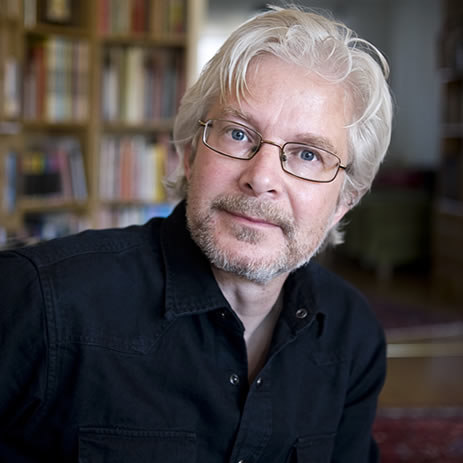
Written by…
Pär Segerdahl, Associate Professor at the Centre for Research Ethics & Bioethics and editor of the Ethics Blog.
Confucius, The Analects, translated by D.C. Lau, Penguin Books, 1979.
Wittgenstein, Ludwig. Culture and Value, translated by Peter Winch. Chicago: The University of Chicago Press, 1980.
Thinking about thinking

Admittedly it is rather rare that somebody changes by seeing her/his mistakes, but occasionally it does happen; if it happens in some dramatic way, the term “Saulus-Paulus event” comes to mind. In a Zen education, it is encouraged/demanded that mistakes be corrected as soon as possible and very explicitly/publicly. And also if the Master says: “I am thinking of giving up speech”, there is a Zen element in it: just “being like” the master (without giving explanations) might get the heads and the attention of the students going, and the koan procedure (which consists of demanding from the student an answer to a question which is impossible to answer by means of usual logic) is presumably just meant to PREVENT the student from “confidently applying some word of the Master” on some situation instead of thinking her/himself. – Aside of this, one should just in our society consider the effect of the profit-oriented media, who eagerly appeal to reaction patterns which are known from also other primate species (in the case of the Ukraine war to what I call “confrontation frenzy” – which sets in if collective defense/aggression is called for during the confrontation with some enemy, invites to label any “deviant” member of one’s own group as a “traitor”, and sells on the media market so extremely well). This so profitable appeal to primate patterns makes it ESPECIALLY difficult to learn from one’s mistakes (as such learning tends to be punished), and it seems that it makes it for Western democracies near impossible to end a conflict by making peace (as the media-cultivated confrontation frenzy will not easily accept anything less than “unconditional surrender”).
Thanks for insightful and interesting comments, Ernst!